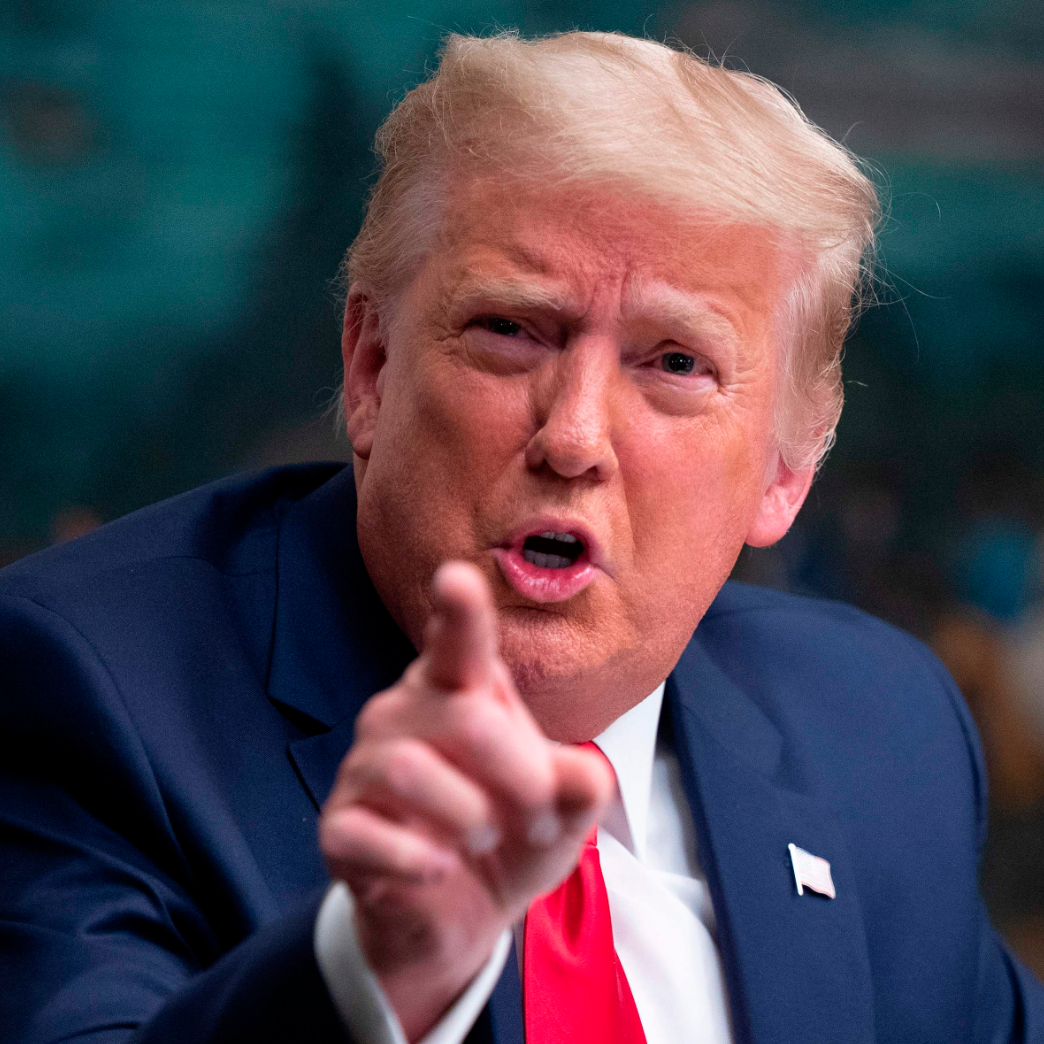
Donald Trump-related activity tracking.
2026
Mar31
Donald Trump stated that major US cities like Chicago, New York, and Los Angeles could call for federal help. This comment comes amidst widespread anti-war protests in these cities against the conflict with Iran, which have reportedly led to a drop in his approval ratings. Previously, Trump had reiterated his hope that Chicago would request assistance.
Trump stated he wants to 'localize' the Federal Emergency Management Agency (FEMA). This follows past government shutdowns that negatively impacted FEMA's operations and stalled its projects, and is consistent with previous efforts by his administration to streamline or reduce the scope of federal agencies.
President Trump is actively pushing for new policies related to citizenship verification. This initiative is a top priority and includes measures to compel states to implement stricter voter ID laws, require citizenship proof for voter registration, and conduct post-election audits. The strategy involves using financial incentives and threatening to withhold federal funds under the Help America Vote Act for non-compliant states. While facing legislative hurdles in the Senate, Republicans are exploring alternative paths like budget resolutions. This push is already causing administrative confusion among federal and state agencies, which lack unified verification standards.
President Trump urged the UK to purchase jet kerosene from the United States. This follows Trump's criticism of the UK for being a "top ally who is unwilling to come" and assist in securing the Strait of Hormuz, where he has demanded payback for US support to allies. The relationship has deteriorated to the point where the UK's Starmer government reportedly demanded the withdrawal of US troops from bases in Britain. Trump's actions are part of a broader strategy where he uses trade as a negotiating tool to achieve his goals, such as compelling China to make concessions.
US stock futures rose after reports that President Trump is willing to end the military campaign against Iran, even if the Strait of Hormuz remains largely closed. This decision is reportedly based on assessments that forcibly reopening the waterway would extend the conflict beyond the original 4-to-6-week timeframe. The news prompted a risk-on market reaction, with equity futures climbing and oil prices declining. This follows a period of volatile messaging, where Trump had previously threatened Iran's energy assets if the strait was not reopened.
Mar30
President Trump announced he will sign an executive order to pay Transportation Security Administration (TSA) staff who have gone without pay during a Department of Homeland Security funding lapse. The move, described as a response to an "emergency situation," is intended to ensure the continuation of TSA operations. Trump reiterated that staff will be paid as needed. The White House has not yet specified the source of the funds or the total amount involved.
In March 2026, Donald Trump made a series of public demands on various fronts. He called for an 18-month extension of FISA's Section 702, citing the conflict with Iran. He made several aggressive statements regarding the Middle East, including threatening to destroy a major Qatari gas field if Iran attacks, and calling on China and other nations to join a U.S.-led naval coalition in the Strait of Hormuz, a move seen as leverage for trade talks. On the economic front, he urged the Federal Reserve to hold a special meeting to cut interest rates and strongly advocated for pro-crypto legislation like the CLARITY Act. He also called for the death penalty for reporters who cover his Iran policy negatively.
Mar29
Investigations are being called for after traders reportedly profited from large, suspicious trades placed just before major policy announcements by Donald Trump. One notable instance involved approximately $580 million in bets against oil prices just 15 minutes before a Trump post on Truth Social about "productive dialogue" with Iran, which subsequently caused oil prices to plunge. This is not an isolated event, with similar patterns observed around announcements on tariffs. The activity has drawn scrutiny from legal experts and politicians like Senator Elizabeth Warren, who is also investigating the Trump family's business ties to crypto firms like Bitmain, citing national security concerns.
Mar27
The White House has announced measures to support the agriculture industry and alleviate rising food prices, which have increased 3.1% over the past year. These actions come amid supply chain disruptions from the Iran war, which have caused fertilizer shortages and price hikes. The new measures include increasing ethanol blending requirements for 2026-2027, offering 90% loan guarantees for small businesses in agriculture and logistics through the SBA, and relaxing certain regulations for farmers.
President Trump announced he will deliver an important speech in Miami. This follows a press conference and speech in Miami on March 9, where he addressed the ongoing U.S.-Israeli military operation in Iran, calling it a "short-term" action and claiming "significant progress." That event, held at his Doral golf club for Republican lawmakers and donors, came as the conflict disrupted their political agenda and pushed oil prices over $100/barrel. More recently, on March 20, Trump appeared "visibly somber" while heading to Florida, with reports suggesting new difficulties concerning the Middle East.
President Trump publicly stated his hope for John Deere and Caterpillar to lower prices on tractors and agricultural equipment for farmers . Alongside this request, he also promised to "eliminate a lot of absurd regulations on agricultural equipment" . This is part of a broader appeal to the agricultural sector, which also includes seeking congressional action to permit year-round sales of E15 ethanol gasoline .
President Trump has announced new regulations for diesel vehicles. This follows previous administration actions, such as signing a resolution to block California's plan to ban the sale of new fuel-powered cars and weakening EPA passenger car emission standards for 2027-2032. The move comes amid public discontent over high fuel prices and the conflict with Iran, which has impacted Trump's approval ratings.
President Trump plans to submit a record-high $1.5 trillion national security budget proposal to Congress on April 3 for fiscal year 2027. The request aims to sharply increase defense spending while cutting domestic programs. This comes amid an ongoing conflict with Iran and a push by Trump to extend FISA surveillance powers for national security. While Congress has previously shown hesitation towards such large increases, the process involves their review and potential modification.
On April 1, the U.S. Supreme Court will hear a pivotal case regarding President Trump’s executive order on birthright citizenship. The order challenges the Fourteenth Amendment's long-standing guarantee of citizenship for those born on U.S. soil and could require parents to prove their own status at the time of a child's birth. If upheld, the policy could adversely affect legal visa holders, green-card holders, and even U.S. citizens, potentially creating an underclass of American-born children without citizenship.
The U.S. is considering sending up to 10,000 additional troops to the Middle East amid tensions with Iran, sparking anxiety in the markets. This has triggered a flight to the U.S. dollar, causing it to hit record highs against several Asian currencies, including the Indian Rupee and Philippine Peso. The currencies of energy-dependent economies like India are particularly vulnerable due to high oil prices and the risk of stagflation.
Donald Trump is scheduled to attend a MAGA meeting on Saturday at 6:30 PM local time . This event is part of a broader pattern of recent activities where Trump has increasingly engaged with and supported the cryptocurrency industry, including hosting events for token holders and influencing Republican party policy to favor digital assets .
U.S. stock index futures rose on Friday after President Trump extended the deadline for potential strikes on Iran's energy infrastructure by 10 days, citing ongoing negotiations. This follows a previous five-day pause announced earlier in the week that also sparked a market rally. However, Iran has confirmed it rejected a U.S. proposal and submitted its own counter-conditions, while official Iranian channels have repeatedly denied that formal talks are even taking place.
President Trump plans to sign an executive order to pay Transportation Security Administration (TSA) agents who have been unpaid since a partial Department of Homeland Security (DHS) shutdown began in February. The move is a response to over 3,120 agents calling out, leading to long airport lines. Trump is bypassing a congressional funding stalemate, which he blames on Democrats, by declaring the situation an "emergency" and using executive authority. It remains unclear where the funds for these payments will be sourced from.
Mar26
In response to a government shutdown that has left Transportation Security Administration (TSA) personnel working without pay, President Trump announced on Truth Social he will sign an order to ensure they are paid. This follows a public offer from Elon Musk to cover the salaries himself, an idea Trump had welcomed. The shutdown has led to staff resignations and significant disruptions at airports, including long lines and flight delays.
On Thursday, March 26, U.S. President Donald Trump signed an executive order requiring federal contractors and their subcontractors to eliminate diversity, equity, and inclusion (DEI) practices. This action is part of a broader pattern of the Trump administration proposing to repeal regulations from previous administrations, such as the rule concerning the classification of independent contractors.