


The logic behind Tesla's launch of the 'Lite Version'

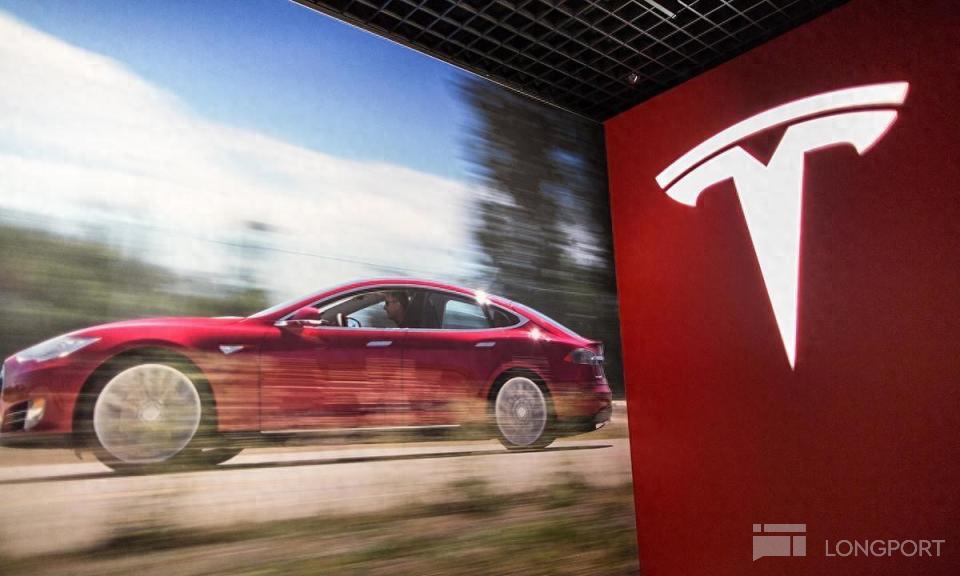
On October 8, Tesla launched new versions of the Model 3 and Model Y priced below $40,000 to counter the impact of the cancellation of U.S. electric vehicle subsidies. Tesla has named the new models the "Standard Range" versions. According to the company's official website, the starting prices for the new standard Model 3 and Model Y are $36,990 and $39,990, respectively, with an estimated range of 321 miles and slightly inferior acceleration performance compared to the current premium models.
The market has shown mixed reactions to Tesla's new "Standard Range" models. In terms of stock price, Tesla's market value once dropped by $460 billion after the announcement. Market analysts also couldn't hide their disappointment. For example, Dan Ives, a well-known Tesla bull and analyst, said, "The launch is relatively disappointing because the price is only $5,000 lower than the previous Model 3 and Y."
This raises the question: What development logic is Tesla revealing with the launch of the "Standard Range" models? And what impact will this move have on the new energy vehicle market?
The End of the EV Subsidy Era
Tesla's launch of the "Standard Range" models comes against the backdrop of the impending cancellation of U.S. electric vehicle subsidies. Essentially, Tesla is trying to mitigate the impact of the subsidy phase-out. For Tesla, as an industry leader, the introduction of the "Standard Range" models holds significant implications. It signals that the future of the EV market will not rely on subsidies but on enhancing the technological value to compete with traditional fuel vehicles.
Analyzing Tesla's "Standard Range" launch, we can see that the era of subsidies as a competitive advantage for EVs is coming to an end. For EV players, the key to future growth lies in leveraging pricing strategies to offset the loss of subsidies, thereby capturing a larger market share and attracting more consumers.
From this perspective, Tesla's move to introduce the "Standard Range" models aligns with the broader trend in the EV market. Only by making EVs more affordable can consumers continue to consider price as a factor, maintaining the price advantage of EVs. Thus, Tesla's "Standard Range" launch is just the beginning—it will kick off a new price war in the EV market.
EV Infrastructure Is Becoming More Robust
In the past, a key competitive factor for many EV players was long-range capability. This focus was largely due to the underdeveloped charging infrastructure at the time. For example, during holidays, long queues at charging stations were common. This issue stemmed not only from the limited range of EVs but also from the lack of sufficient charging infrastructure.
With the increasing number of EVs and the gradual improvement of supporting infrastructure, the problem of charging queues has been significantly alleviated. According to data from the Ministry of Public Security, as of the end of June 2025, China had 460 million motor vehicles, including 359 million cars. In the first half of 2025, 16.88 million new motor vehicles were registered, including 12.5 million new car registrations, a year-on-year increase of 0.68%.
In terms of new energy vehicles (NEVs), as of June 2025, China had 36.89 million NEVs, including 25.539 million pure electric vehicles, accounting for 69.23% of the total NEV fleet. In the first half of 2025, 5.622 million new NEVs were registered, a 27.86% year-on-year increase, setting a new record. NEVs accounted for 44.97% of new car registrations.
The China Electric Vehicle Charging Infrastructure Promotion Alliance released data on the operation of EV charging and battery-swapping infrastructure in July. As of the end of July, China had 16.696 million EV charging points, a 53% year-on-year increase.
Public charging points reached 4.202 million, up 38% year-on-year, while private charging points reached 12.494 million, up 58.8% year-on-year.
These figures show that nearly half of EVs now have access to charging facilities. With the gradual improvement of EV infrastructure, range is no longer a major concern. For many EV players, the focus is shifting from long-range to affordability and consumer accessibility. Tesla's "Standard Range" models, despite their reduced range, may not significantly impact the consumer experience.
EV Adoption Rate Will Continue to Rise
According to statistics from Clean Technica, the share of EV sales in global car sales has been steadily increasing: 4% in 2020, 9% in 2021, 14% in 2022, 16% in 2023, and 22% in 2024. In December 2024, the EV market share surged to 30%, setting a new record.
Data from the China Passenger Car Association (CPCA) shows that China's new energy passenger vehicle growth has significantly outpaced the global average in recent years, becoming the main driver of global NEV growth. China's share of global NEV sales exceeded 63% in 2022, 64% in 2023, and remained at 70.4% from January to December 2024, reaching 75% in Q4.
Despite the rapid growth of EVs in China, there is still significant room for expansion in global EV adoption. As of July 2025, the NEV penetration rate was 48.5% in China, 26% in Germany, 82% in Norway, 30% in the UK, but only 10% in the U.S. and 2% in Japan, highlighting the uneven global development of NEVs.
For Tesla, the launch of the "Standard Range" models can help offset the impact of subsidy cuts. However, compared to China's leading market, there is still room for further growth. The "Standard Range" models will undoubtedly meet the demand of more consumers and further boost EV adoption.
For Chinese EV players, expanding into overseas markets with low EV penetration is a strategic opportunity. Data shows that Chinese-brand NEVs accounted for 14.7% of overseas markets in 2024, rising to 18.8% in 2025, with plug-in hybrids making up 75.7% of the share. Seizing this opportunity could be a key way for EV players to capitalize on the global adoption trend.
EV Development Will Shift Toward High Standards
In both China and overseas markets, EV competition has traditionally been price-driven. As the EV market enters a phase of high-quality development, players must move away from price wars and low-cost strategies to focus on innovation and value-added features.
Tesla's "Standard Range" launch is not only a response to subsidy cuts but also a signal that future EV competition will emphasize technology and premium features. In the future EV market, success will depend on who can deliver higher value and better quality products.
Therefore, while Tesla's "Standard Range" models will impact EV adoption, they also mark a deeper shift toward high-quality competition in the industry. For EV players, the key to success lies in enhancing product value, technological appeal, and meeting evolving consumer demands.
Final Thoughts
Tesla's "Standard Range" launch aligns with the broader trends in the EV industry. As subsidies phase out, the EV market will transition to a high-quality development phase. For players aiming to stay competitive, the focus must be on innovation, global expansion, and meeting consumer needs.
The copyright of this article belongs to the original author/organization.
The views expressed herein are solely those of the author and do not reflect the stance of the platform. The content is intended for investment reference purposes only and shall not be considered as investment advice. Please contact us if you have any questions or suggestions regarding the content services provided by the platform.
