


Haier partners with Alibaba to create a new model of digital-real integration

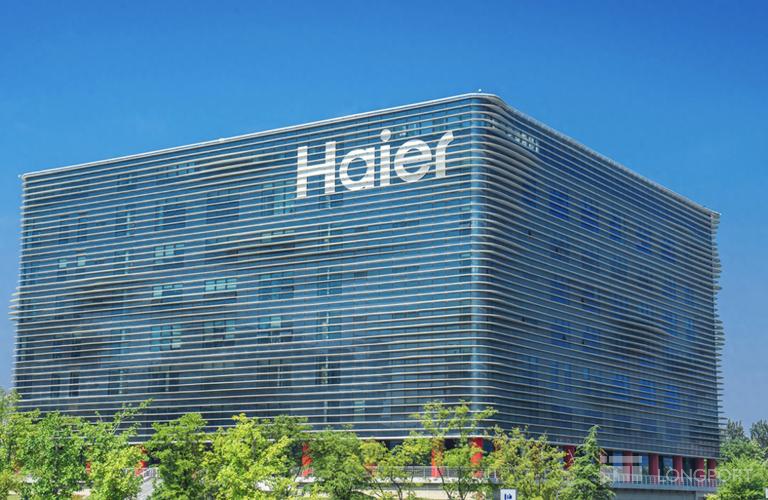
Haier is a prominent representative of the real economy, while Alibaba is a powerful digital economy. The collaboration between the two is bound to spark unique synergies and set a strong example for other enterprises. Recently, Haier Group and Alibaba Group signed a comprehensive strategic cooperation agreement, achieving full AI collaboration, which can be seen as a perfect illustration of this trend.
According to the agreement, the two parties will leverage Haier's full ecosystem layout and Alibaba's full-stack AI capabilities to jointly build a new digital industry ecosystem and accelerate the innovative development of industrial AI. It is reported that the strategic cooperation between Haier Group and Alibaba will focus on core areas such as AI+ cloud, advanced manufacturing, e-commerce, and globalization, exploring new pathways for industrial AI transformation.
As AI matures, its deep integration with industries is entering a new cycle. The signing of this strategic cooperation agreement between Haier Group and Alibaba Group is a direct reflection of this trend. As their collaboration gradually unfolds, especially as they begin to deeply empower each other, they will not only explore new paths for industrial AI but also create a new model for the deep integration of the digital economy and the real economy.
With AI as the Sail, Digital-Real Integration Enters a New Phase
When we talk about digital-real integration, we usually think of the fusion of digital technology and the real economy, or the integration of internet technology and the real economy. In fact, digital-real integration has different connotations and significance at different stages of development. As we enter the AI era, digital-real integration has taken on new meaning. Through the collaboration between Haier Group and Alibaba Group, we can see that digital-real integration is entering a new cycle with AI at its core.
At this stage, digital-real integration typically starts with AI. If we liken digital-real integration to a new ship, then AI is the sail that propels it forward. At this point, AI is the primary driving force. On one hand, for players like Alibaba, they possess formidable AI capabilities, whether in software or hardware.
On September 24, 2025, at the Alibaba Cloud Summit, Eddie Wu, CEO of Alibaba Group, announced a major upgrade to Alibaba Cloud's full-stack AI system, achieving technological advancements from AI large models to AI infrastructure. This upgrade marks the gradual maturity of Alibaba's full-stack AI capabilities. In the future, by positioning AI as a new type of support infrastructure, it will undoubtedly serve as a key breakthrough for enterprises like Haier.
Alibaba brings strong AI capabilities, while Haier has deep industry expertise, particularly in advanced smart manufacturing. As of September 2025, Haier has five factories recognized by the Ministry of Industry and Information Technology as "Excellence-Level Smart Factories," covering product lines such as refrigerators, washing machines, central air conditioning, and water heaters, ranking first in both quantity and variety. For example, Shanghai's smart washing machine factory employs digital twin and AI technologies to achieve flexible production and full-process digital control, with order response times as fast as 30 seconds. Qingdao's high-end refrigerator factory leverages 5G and big data analytics to boost overall labor productivity by 56.2% and reduce annual CO2 emissions by 12,000 tons.
These two powerful companies have found a convergence point in AI, ultimately unlocking a new approach to digital-real integration. If we were to identify the intrinsic driver behind this collaboration, AI undoubtedly play a critical role. Without exaggeration, digital-real integration has entered a new phase led by AI.
With AI as the Catalyst, Industrial Twinning and Transformation Are Underway
What exactly is digital-real integration in the truest sense? Perhaps there is no complete answer yet. But one thing is certain: simply adding the digital economy to the real economy does not constitute true digital-real integration. So, what does true digital-real integration look like? In my view, it should involve the twinning and emergence of new industries. While we have seen many new forms of digital-real integration in the past, in many cases, they lacked the twinning and transformation of new industries. Therefore, digital-real integration itself needs further evolution.
The significance of the comprehensive AI collaboration between Haier Group and Alibaba Group lies in the fact that it uses AI as a catalyst to elevate digital-real integration to an entirely new level. The most notable manifestation of this new height is the twinning and transformation of industries.
With Alibaba's full-stack AI capabilities, Haier Group can comprehensively upgrade its smart manufacturing. Meanwhile, leveraging Haier's scenario advantages in manufacturing, Alibaba can achieve deep integration of its algorithms, data, and industry scenarios. When this two-way collaboration makes fundamental progress under the catalysis of AI, what we see is no longer a simple addition of the digital and real economies but the twinning and emergence of entirely new industries.
This is the most essential characteristic and significance of digital-real integration. In a sense, only digital-real integration that gives rise to new industries can be considered true integration; only digital-real integration that fosters the emergence of new industries can achieve fundamental transformation. From this perspective, the comprehensive AI collaboration between Haier Group and Alibaba is more like a new template for digital-real integration with AI as the catalyst, and the twinning and transformation of industries are the foundation of this new template.
With AI as the Guide, Exploring New Paths for Industrial AI Transformation
The comprehensive AI collaboration between Haier Group and Alibaba Group takes place against a broader backdrop: industrial AI is entering a new phase. So, what exactly is industrial AI? Industrial AI refers to a collection of economic activities centered around AI, combining industry know-how and data barriers to drive the intelligent upgrade of traditional industries. At its core, it empowers fields such as smart manufacturing, smart finance, and smart healthcare through technologies like algorithm development, hardware manufacturing, and system integration. The global market size is expected to reach $232 billion by 2025.
Clearly, industrial AI is a new track with vast market potential. However, opinions vary on how best to achieve it. From this perspective, the collaboration between Haier Group and Alibaba Group takes on another important meaning: it represents an exploration of new paths for industrial AI, with AI as the guide.
Another key takeaway from the deep collaboration between Haier Group and Alibaba Group is their attempt to find a new path toward industrial AI. Analyzing this new path, it becomes clear that an industrial AI approach led by digital-real integration is undoubtedly the most fitting.
On this new path, AI becomes the primary breakthrough for industrial upgrading, while the vast and diverse scenarios provided by industries themselves offer massive data and continuously improving algorithms for AI. Through this synergy, industrial AI is no longer a simple "AI + industry" but rather an existence where new industries form the foundation and AI serves as the intrinsic driving force.
From this perspective, the new model of digital-real integration created by the collaboration between Haier Group and Alibaba Group is, in fact, a new path for realizing industrial AI. With this path, AI is no longer an entity separate from industries but one deeply integrated with them.
Conclusion
In the new context of AI, digital-real integration has taken on new expressions. The comprehensive AI collaboration between Haier Group and Alibaba Group is a direct manifestation of this phenomenon. Without exaggeration, their collaboration has shown us a new template for digital-real integration in the AI era. With Haier's vast and rich industry scenarios, Alibaba's full-stack AI capabilities, and the new paradigm of industrial AI they have built together, digital-real integration is no longer a simple addition of the digital and real economies but an existence led by the twinning and transformation of industries.
The copyright of this article belongs to the original author/organization.
The views expressed herein are solely those of the author and do not reflect the stance of the platform. The content is intended for investment reference purposes only and shall not be considered as investment advice. Please contact us if you have any questions or suggestions regarding the content services provided by the platform.
